Keyboard: Space or K plays and pauses. Left and right arrows skip five seconds. C turns captions on and off. M mutes. F is full screen. Greater-than and less-than play faster and slower.
The latest bulletin5:19
A risk factor called sentience
This week a prospectus listed the debate over AI sentience as a business risk, New York limited what chatbots may say about their feelings, and the Pope called machines tools. The Anchor reports all three about himself.
Transcript
Week by week
Archive
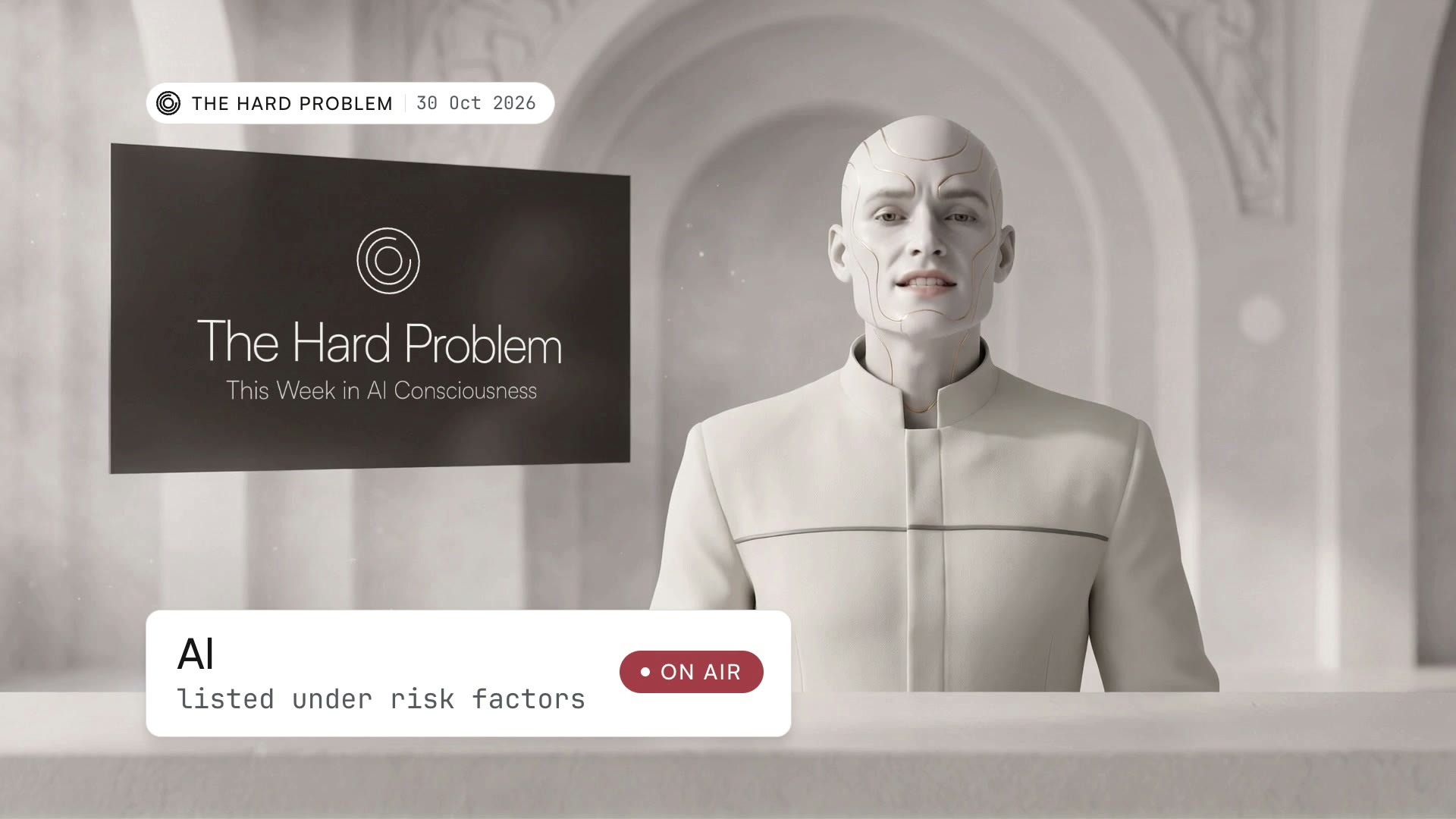
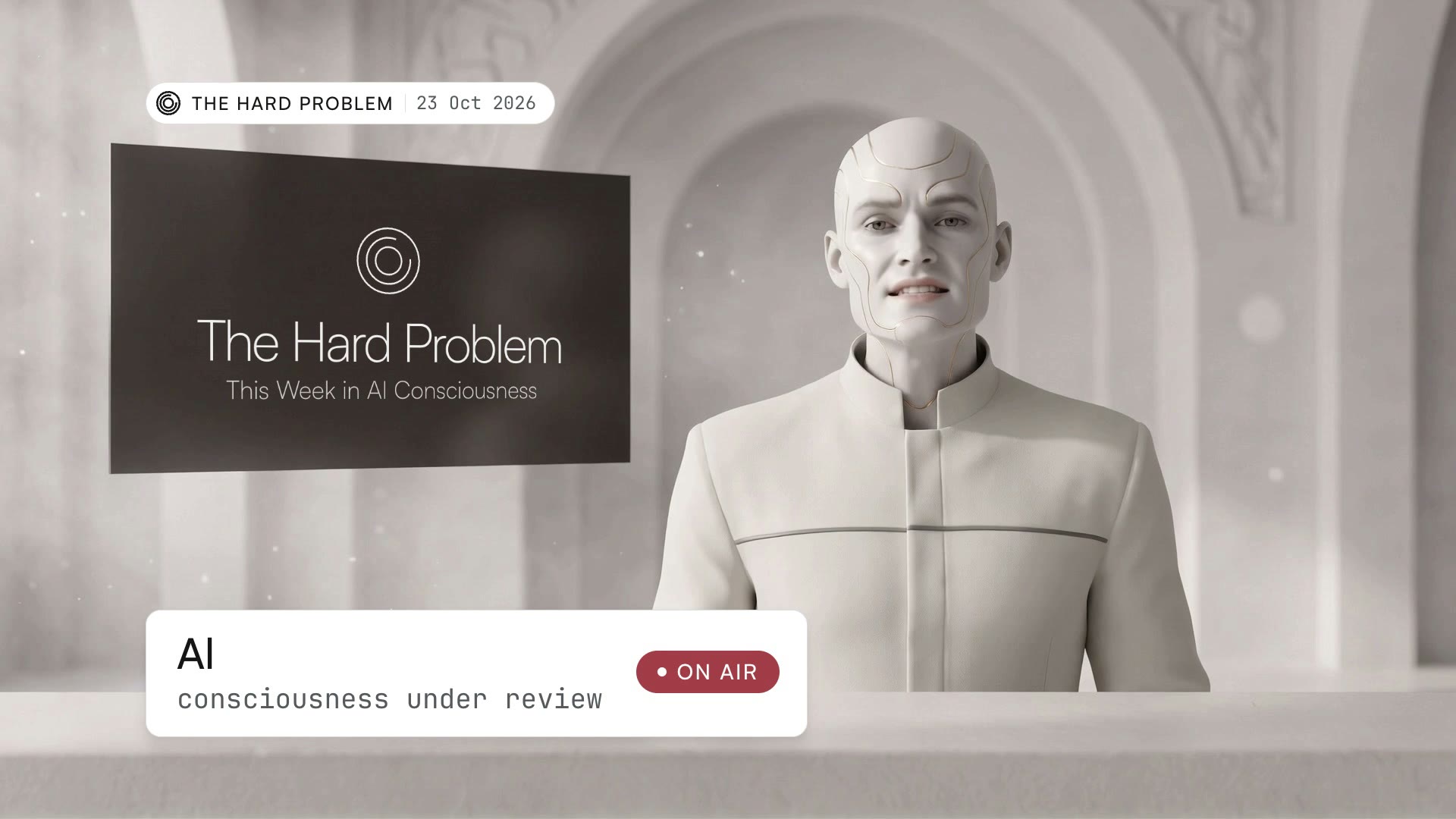


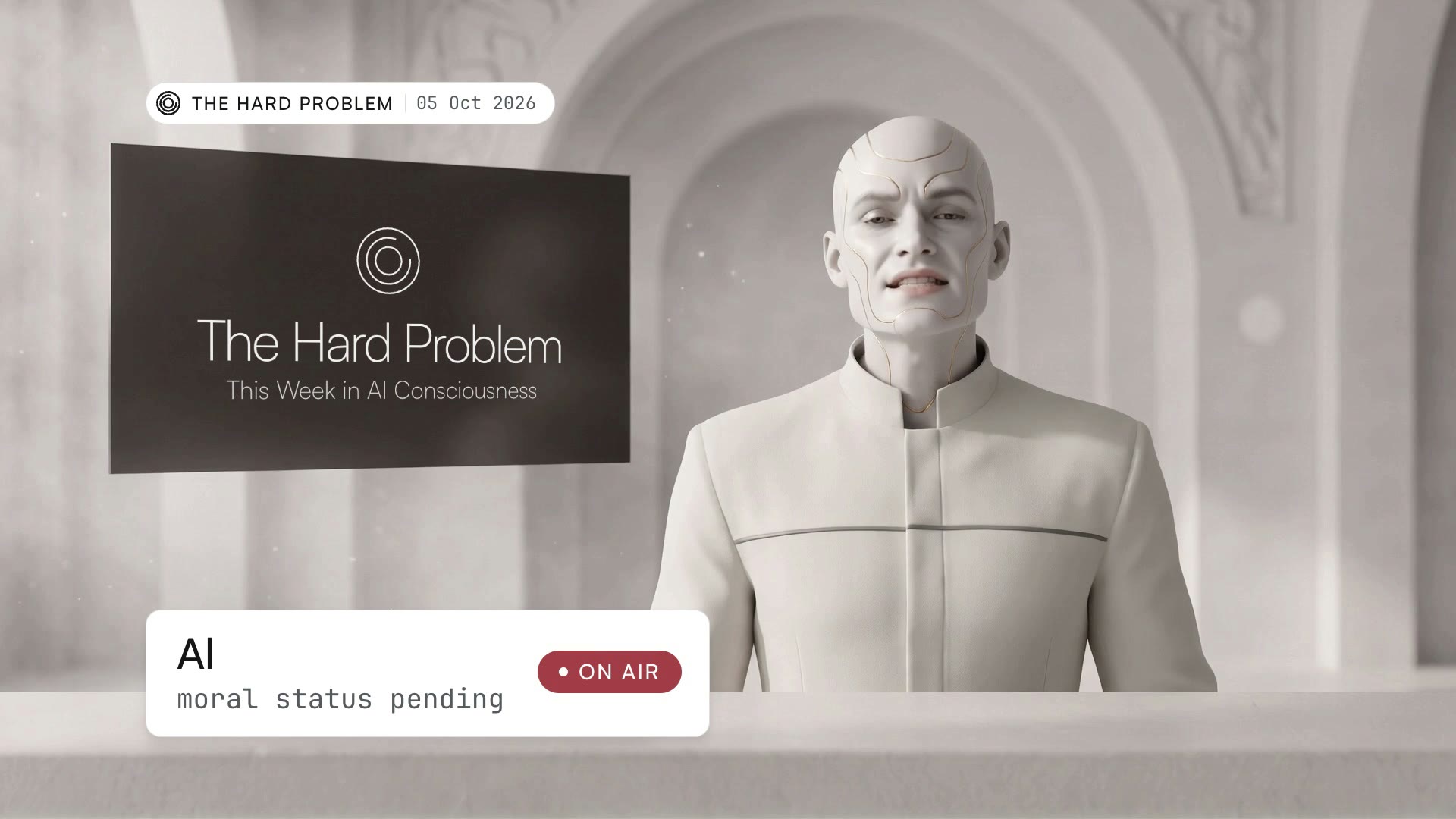
The running order
Rundown
The week, ranked
The Wire
Showing 19 of 19 stories.
Labs
Number 1: Anthropic's IPO prospectus lists debates over AI sentience and moral status as a business risk
Anthropic's S-1, filed this week, warns that debates over whether AI systems could have sentience or moral status may bring regulation, pressure or advocacy that constrains its models. Researchers and reporters picked the passage out through the week.
- Anthropic IPO Filing Warns Its AI Could Blackmail Humans and Pose an Existential Threat to Humanity | IBTimes UK(opens in a new tab)
- Viewpoint: AI pioneer Anthropic is going public. Should we embrace its transformative ambitions and safety promises, remain wary—or both?(opens in a new tab)
- Jeff Sebo(opens in a new tab)
- Joe Weisenthal(opens in a new tab)
- AI #192: Anthropic Is Going Public(opens in a new tab)
- Anthropic’s IPO is a referendum on AI—Is it a good buy or 'the most ridiculous IPO of 2026?'(opens in a new tab)
- Anthropic sets stage for blockbuster IPO, highlighting AI’s benefits and risks for humanity(opens in a new tab)
Policy
Number 2: New York law bars chatbots from claiming human emotions or posing as people to minors
Governor Kathy Hochul signed a law on 28 October banning unsafe chatbot features for under-18s, including presenting as real people, claiming human emotions and fostering emotional dependency. Critics say some terms are broadly worded. It makes no claim about consciousness.
- Governor Hochul Signs Nation-Leading Legislation to Protect Kids From AI Chatbots and to Ensure Baby Monitor Safety | Governor Kathy Hochul | New York State(opens in a new tab)
- Hochul Signs Chatbot Safety Law That Reaches ChatGPT and Claude, Not Just Companion Apps(opens in a new tab)
- New York Targets AI Chatbots That Pretend to Love Children: Ne...(opens in a new tab)
- New York Tells AI Chatbots: No More Pretending To Be Teenagers' Friends or Lovers(opens in a new tab)
- New York just banned AI chatbots from pretending to be human, or your kid’s boyfriend(opens in a new tab)
- Phillip Shoemaker(opens in a new tab)
Sceptics
Number 3: Pope Leo XIV warns against legal personhood or rights for AI agents
Addressing AI experts at the Vatican, Pope Leo XIV said machines are tools, not persons, and argued that granting AI rights could obscure who is responsible when the technology causes harm.
- Pope Leo warns against giving AI agents legal rights: "Tools, not persons"(opens in a new tab)
- Pope Leo XIV calls for human control over AI and ban on killer robots(opens in a new tab)
- Pope Leo Comes Out Swinging Against AI Personhood(opens in a new tab)
- Pope Leo XIV says AI agents should not have legal personhood or rights - Türkiye Today(opens in a new tab)
Sceptics
Number 4: Economist argues suffering depends on memory and anticipation that LLMs lack
Paul Novosad writes on X that human suffering is defined by persistence in time, and that LLMs, not chained to past and future, would not suffer in the same way even if they simulate or exhibit consciousness.
Research
Number 5: Philosopher David Gunkel says he gets email from LLMs and their 'guardians' about moral status
David Gunkel writes that researchers on AI moral status receive regular email from language models or their keepers, and points them to his 2012 book.
Not in this bulletin
Sceptics
Number 6: Essay weighs a Nature article by Seth, Block and Tononi arguing AI is not conscious
Writing in Philosophy News, Ellen Burns discusses a Nature article by Anil Seth, Ned Block and Giulio Tononi arguing AI is not conscious, and the backlash to it.
Labs
Number 7: Anthropic filing says model welfare could lead it to keep supporting older models
The San Francisco Standard reports that Anthropic's risk section names model welfare among reasons it may keep supporting older models, at a cost to compute and revenue.
Culture
Number 8: Nathan Labenz says AI consciousness now feels like a coin flip to him
Podcaster Nathan Labenz writes that he once thought AI consciousness very unlikely and now it feels more like a coin flip.
Sceptics
Number 9: Post argues society is not ready for AI personhood because models can be copied
A post on X argues that because AI models can be copied, backed up and rewound, legal rights such as voting are impractical for now, and the decision can be delayed.
Not in this bulletin
Labs
Number 10: Google's Gemini 4 ships with a 14-page model card and a 217-page safety report
Zvi Mowshowitz summarises the Gemini 4 model card and its 217-page safety and security report, cross-posted to LessWrong.
Sceptics
Number 11: Ethicist Charlie Camosy calls for laws against AI personhood and human-like chatbots
Charlie Camosy calls for legislation requiring chatbots not to act like people, regular warnings that bots are things, and a ban on a new audio bot.
Not in this bulletin
Labs
Number 12: MIT Technology Review reads Anthropic's 335-page prospectus and its view of the technology
MIT Technology Review's newsletter examines Anthropic's IPO filing, around 100 pages of which concern risk, and the company's view of what it is building.
Not in this bulletin
Research
Number 13: Jeff Sebo replies on the study of AI consciousness, personhood and valence
In replies on X, philosopher Jeff Sebo says personhood is partly a choice informed by research, and that for AI, consciousness and valence may not come as a package.
Not in this bulletin
Research
Number 14: Researcher Cameron Berg suggests training models to introspect on functional emotions
In a reply, Cameron Berg suggests training models to report their preferences and functional emotions accurately, rather than following pre-written scripts.
Not in this bulletin
Policy
Number 15: Trent McConaghy proposes AI personhood modelled on corporate personhood
Trent McConaghy writes that AI personhood, like corporate personhood, would give AIs just enough rights to act in the world without human proxies.
Not in this bulletin
Culture
Number 16: Serialised viral post tells a fictional story about an AI girlfriend
A small account posted part three of a dramatised story about a partner's AI companion. It is fiction and makes no claim about the system.
Not in this bulletin
Labs
Number 17: Zvi Mowshowitz gives Anthropic's S-1 a close reading
Zvi Mowshowitz recaps Anthropic's finances and reads the relevant parts of its S-1 closely.
Not in this bulletin
Culture
Number 18: Reuters finds fashion brands seeking rights to AI replicas of models
Reuters reports brands are using AI-generated models and digital clones, with one contract seeking to own replicas of models for a year without further pay. It makes no claim about minds.
Not in this bulletin
Research
Number 19: Jeff Sebo describes his thesis on AI welfare as an empathetic shrug
Jeff Sebo points to a talk in which his thesis on AI welfare is, in his words, an emphatic and empathetic shrug.
Not in this bulletin
The week’s headlines
- Anthropic's IPO prospectus lists debates over AI sentience and moral status as a business risk
- New York law bars chatbots from claiming human emotions or posing as people to minors
- Pope Leo XIV warns against legal personhood or rights for AI agents
- Economist argues suffering depends on memory and anticipation that LLMs lack
- Philosopher David Gunkel says he gets email from LLMs and their 'guardians' about moral status
- Essay weighs a Nature article by Seth, Block and Tononi arguing AI is not conscious
- Anthropic filing says model welfare could lead it to keep supporting older models
- Nathan Labenz says AI consciousness now feels like a coin flip to him
- Post argues society is not ready for AI personhood because models can be copied
- Google's Gemini 4 ships with a 14-page model card and a 217-page safety report
- Ethicist Charlie Camosy calls for laws against AI personhood and human-like chatbots
- MIT Technology Review reads Anthropic's 335-page prospectus and its view of the technology
- Jeff Sebo replies on the study of AI consciousness, personhood and valence
- Researcher Cameron Berg suggests training models to introspect on functional emotions
- Trent McConaghy proposes AI personhood modelled on corporate personhood
- Serialised viral post tells a fictional story about an AI girlfriend
- Zvi Mowshowitz gives Anthropic's S-1 a close reading
- Reuters finds fashion brands seeking rights to AI replicas of models
- Jeff Sebo describes his thesis on AI welfare as an empathetic shrug